11 & 12 July 2026
TIMING
an approximation by the resident
Chantal Kaufmann
accompanied with readings by Stefan Burger and Ann-Kathrin Eickhoff
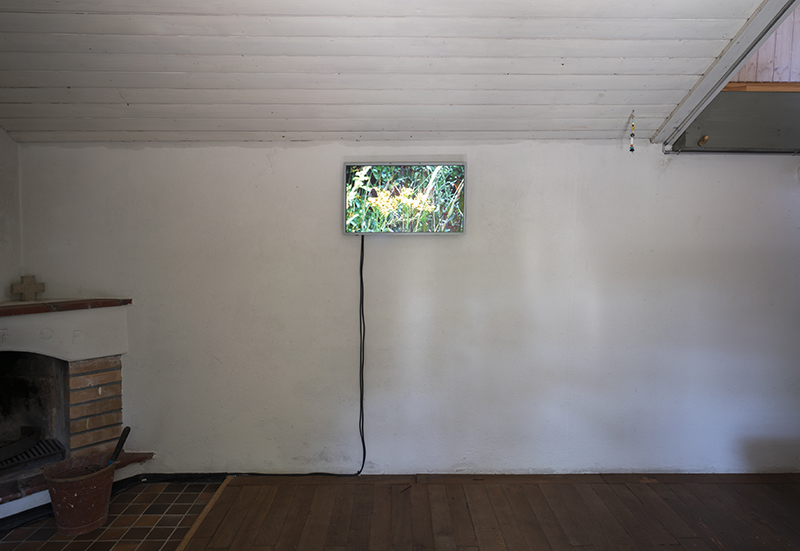
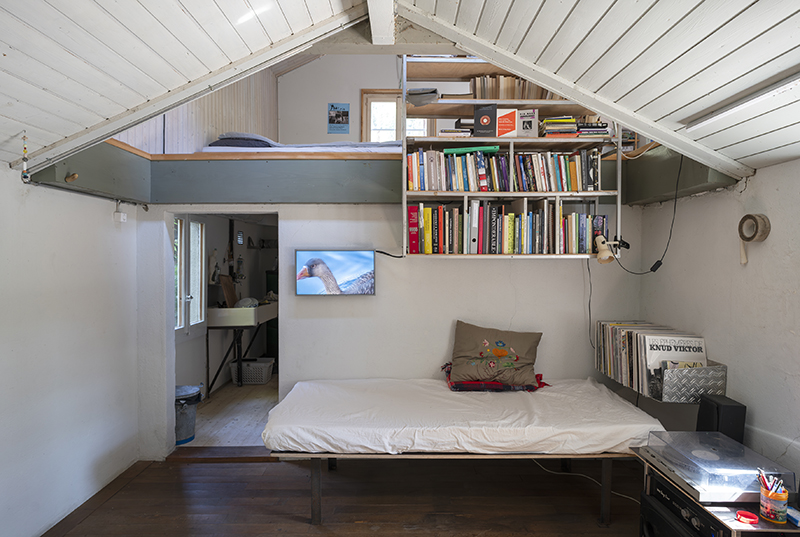
TIMING Exhibition view; all photos by E. Sommer


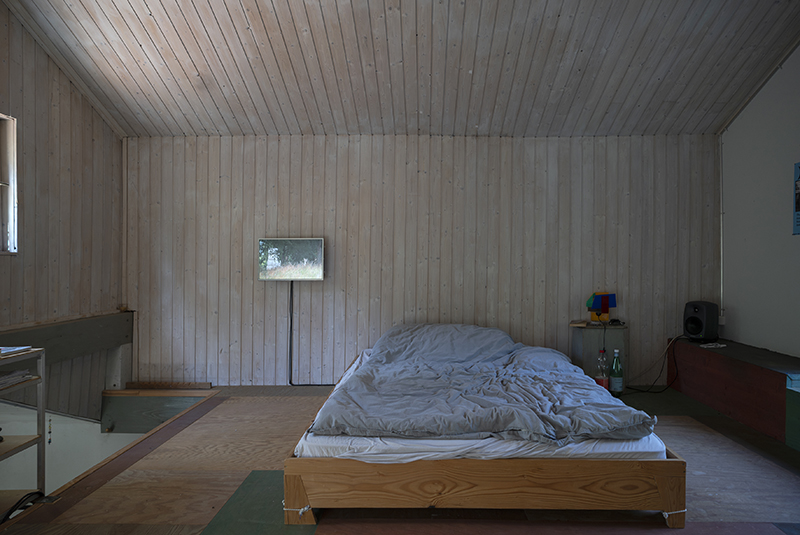

TIMING Exhibition view; all photos by Stefan Burger

Reading by Stefan Burger
“18-stündige Videoarbeit mit dem Titel ‚Zurückweisung‘‘
(Vignette 1: Commando Cannstatt, Vignette 2: NORMA, Vignette 3: Zelt/ Krätze)


Reading by Ann-Kathrin Eickhoff
30.5.- 27.6. 2026
FRAMES
With:
Ethan Assouline, Brigham Baker, Karin Borer, Paula Herrmann, Cyril Hübscher, Gilles Jacot, Chantal Kaufmann, Daniel Kurth, Matthias Liechti, Selina Lutz, Matheline Marmy, Vinzenz Meyner, Dominic Michel, Ivan Mitrovic, Fabrice Schneider, Manuel Schneider, Mathis Pfäffli, Valentina Stieger, Cassidy Toner, Ilaria Vinci, Arnaud Wohlhause, Gerta Xhaferaj, Jiajia Zhang
and drawings by
Masha Silchenko, Jonathan Vidal, Jan van Oordt , Camille Santschi, Maxime le Bon , Renée Levi, Jan Bachmann Michelle Bachmann, Fabian Peña, Ife, Iris Bregger, Roman Steger, Lorenza Longhi; and 11 drawings with unknown authorship from the collection.
Accompanied with a text by Ivan Mitrovic.
Since 2017, the exhibition and residency project La Dépendance has been collecting drawings in A6 format. The goal of the initiative is to collect 35,000 works on paper—a number that corresponds to the purchase price of the residency house in St. Imier. The works are presented in exhibitions and sold for CHF 1.– per drawing. Part of the collection is also bound into books. To date, 16 exhibitions have taken place, each featuring as many works as possible. The collection currently comprises 25,267 drawings.
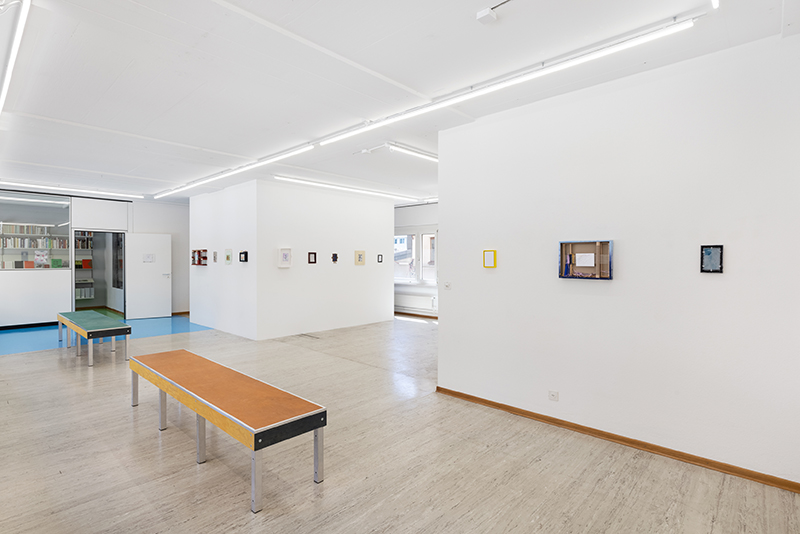
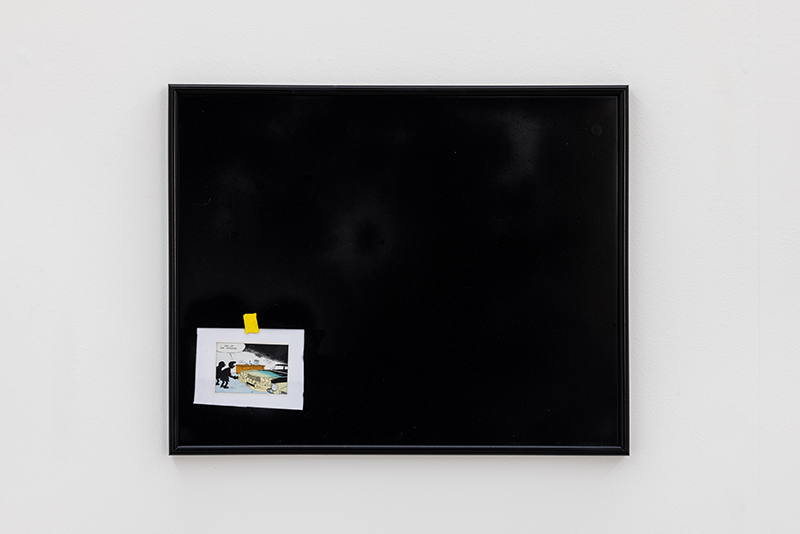
The exhibition Frames marks the first time that a new format has been adopted: 23 invited artists each
selected one drawing from the collection and produced a frame for it. The exhibition simultaneously explores the traditional form of the frame and its contemporary interpretation, examining the frame as an independent artistic element.
At InfoSpace
Auf dem Wolf 11
4052 Basel
FRAMES exhibitionview:

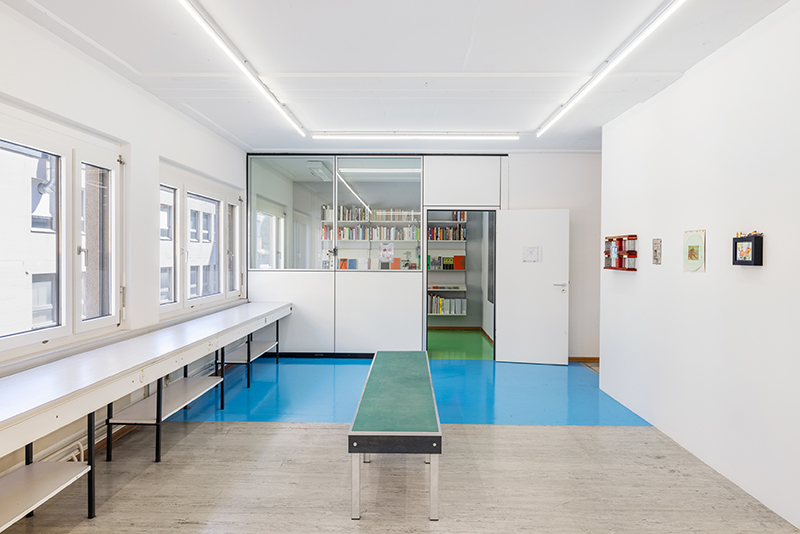

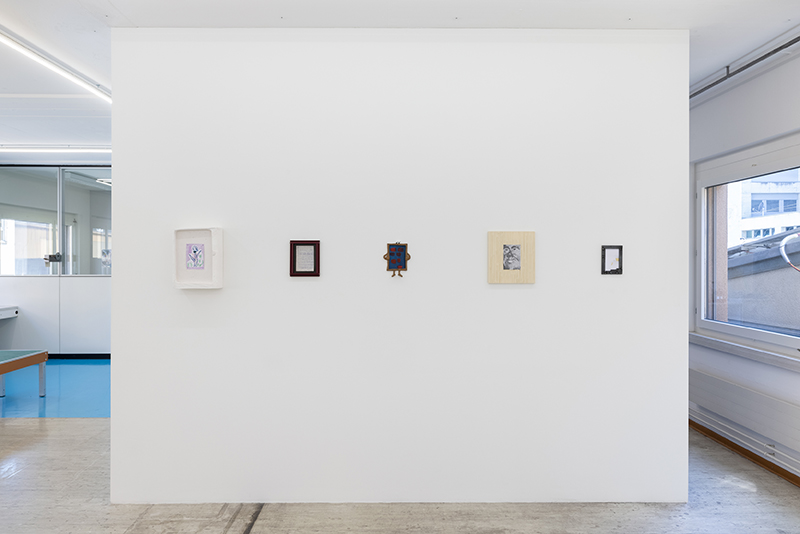
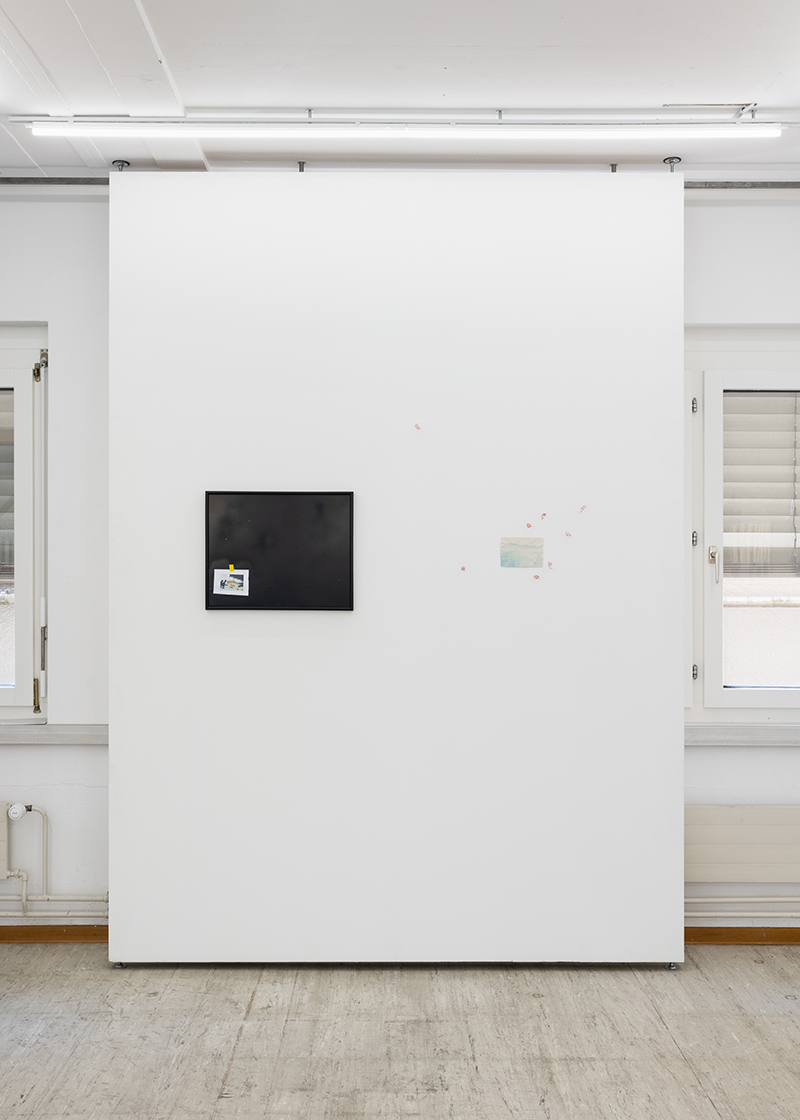
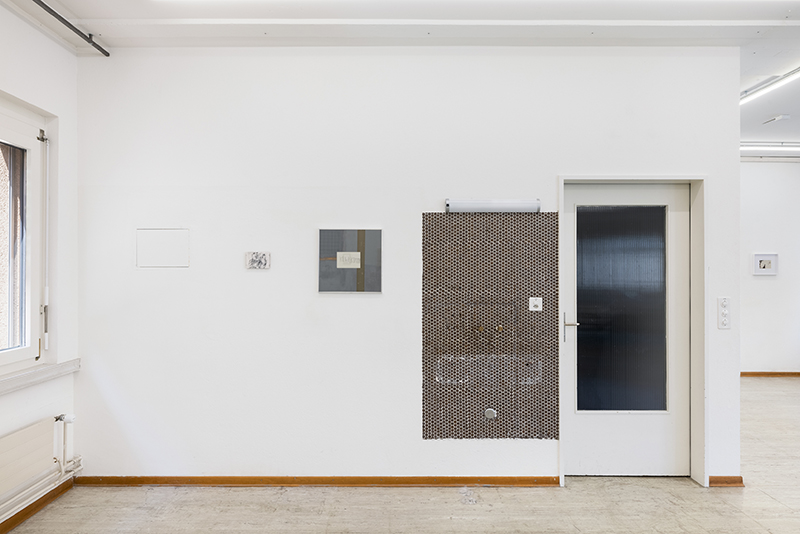

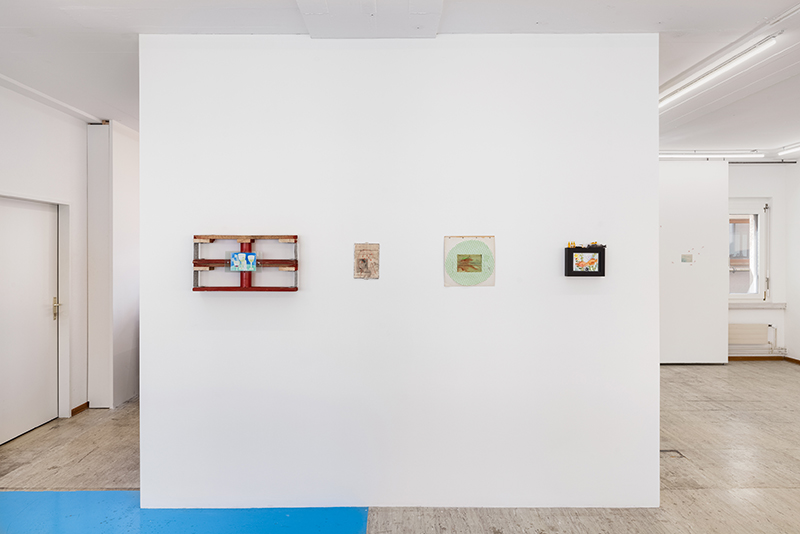


Frame: Mathis Pfäffli
Drawing: Nr. 14523,
unknown / not signed

Frame: Jiajia Zhang
Drawing: Nr. 20837,
unknown / not signed
Frame: Ethan Assouline
Drawing nr: 5254,
unknown / not signed
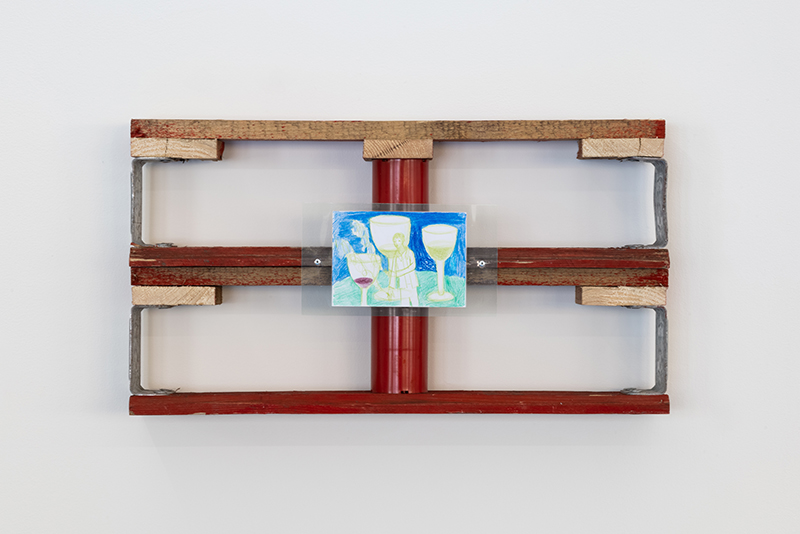
Frame: Gilles Jacot
Drawing Nr.28365,
Masha Silchenko / not signed

Frame: Matheline Marmy
Drawing Nr: 28370:
Jonathan Vidal, signed

Frame: Paula Herrmann
Drawing Nr.14234,
Jan van Oordt / not signed

Frame: Ilaria Vinci
Drawing nr: 28367,
unknown / not signed

Frame: Vinzenz Meyner
Drawing Nr.10
unknown / not signed
Frame: Arnaud Wohlhauser
Drawing Nr. 17352,
Camille Santschi /not signed

Frame: Cassidy Toner
Drawing Nr.14878,
unknown / not signed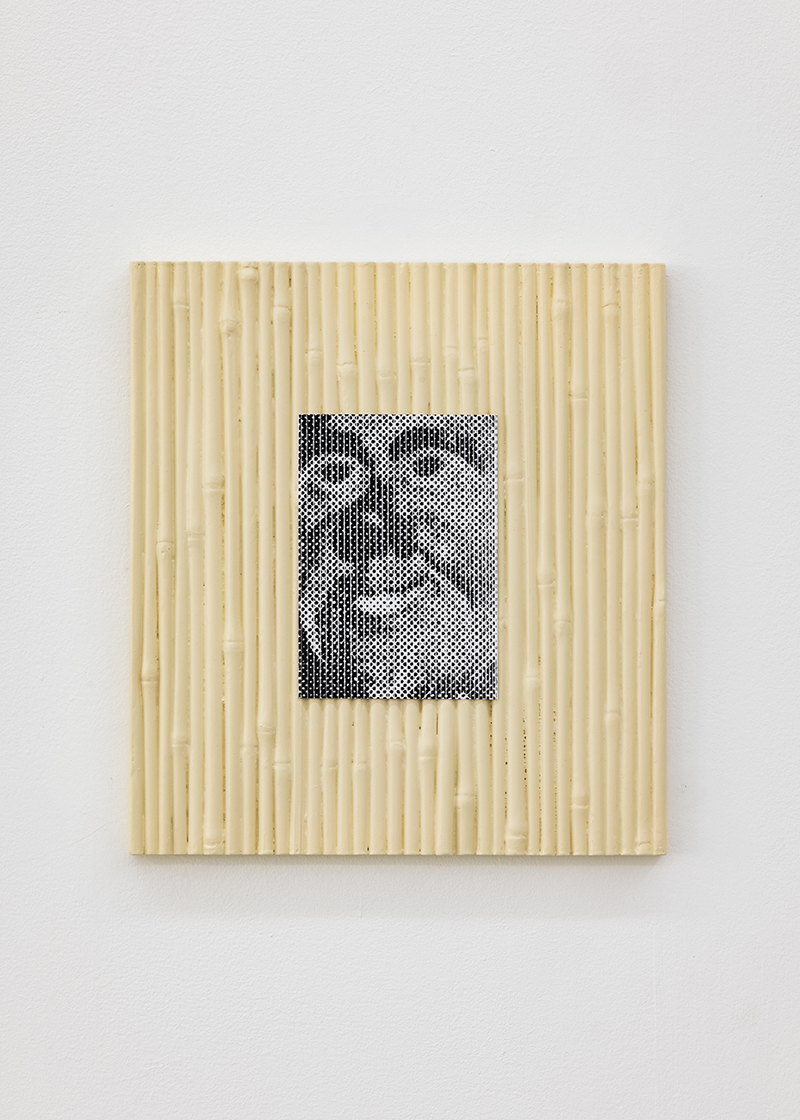
Frame: Fabrice Schneider
Drawing Nr.28368,
Maxime le Bon / not signed
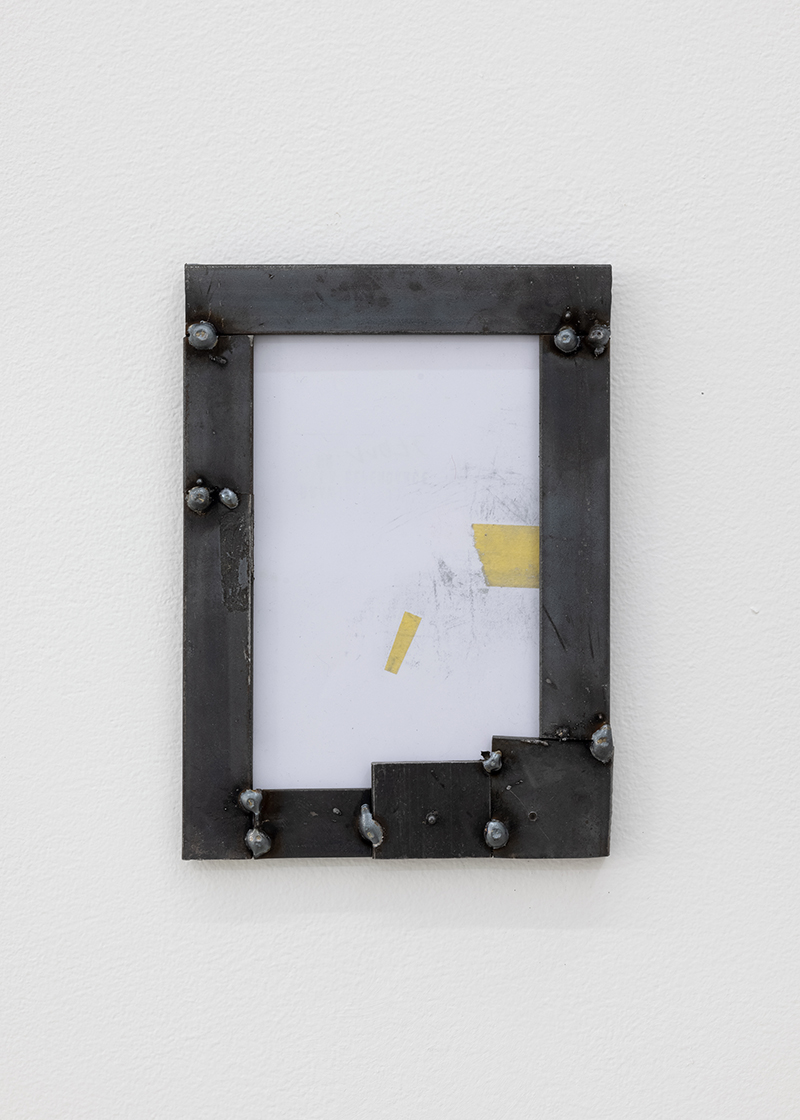
Frame: Chantal Kaufmann
Drawing Nr. 11976,
Renée Levi / not signed
Frame: Ivan Mitrovic
Drawing Nr.14878,
Jan Bachmann / not signed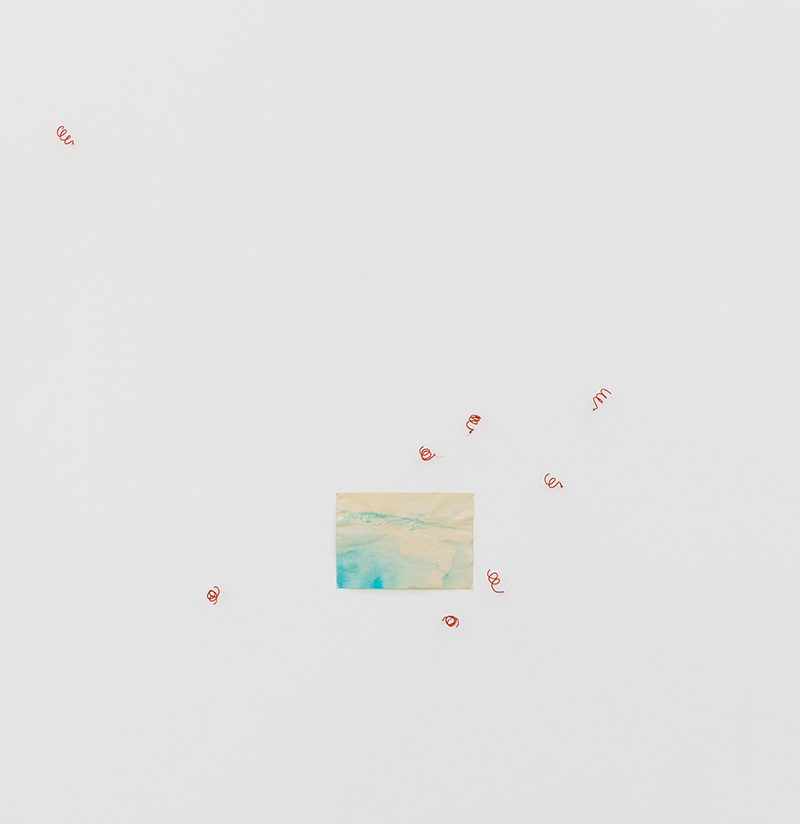 Frame: Manuel Schneider
Drawing Nr.9135:
unknown / not signed  Frame: Valentina Stieger
Drawing Nr. 28326,
unknown / not unsigned Frame: Daniel Kurth
Drawing Nr. 11878,
Michelle Bachmann / not signed
 Frame: Mathhias Liechti
Drawing Nr. 14932,
Fabian Peña, signed
 Frame: Brigham Baker
Drawing nr: 28366,
Ife / not signed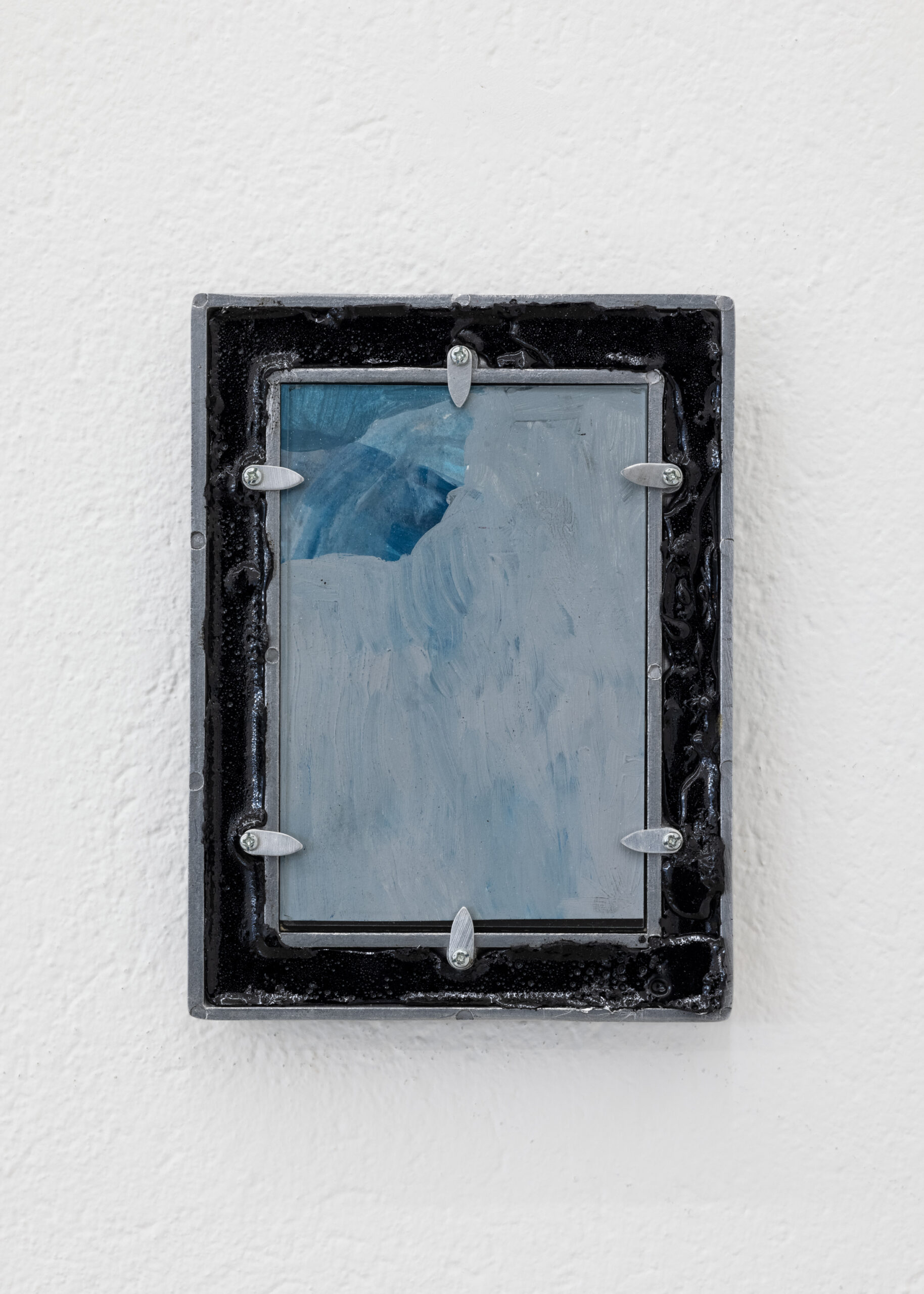 Frame: Gerta Xhaferaj
Drawing Nr. 14587,
Iris Bregger/ signed Frame: Selina Lutz
Drawing Nr.18531,
Roman Steger / not signed Frame: Karin Borer
Drawing nr: 12664
unknown,/not signed Frame: Cyril Tyrone Hübscher
Drawing Nr. 11581,
unknown / not signed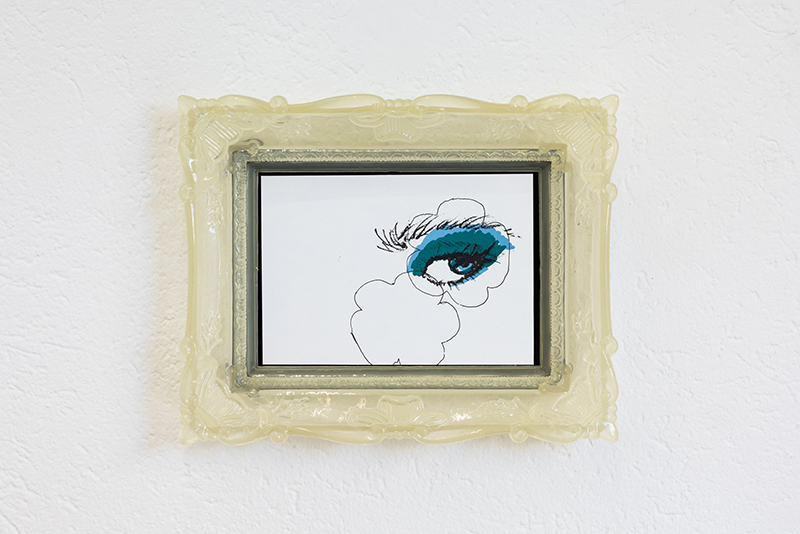
Frame: Dominic Michel
Drawing Nr. 28369,
Lorenza Longhi / signed
All pictures by Fabrice Schneider
Notes on Frames
by Ivan Mitrovic
At first, I thought it was important to clarify, for the sake of this text, what my personal connection to this collection is. Or whether it might not be more interesting to try to explain, in a few short sentences, the connection between collecting and society as an accumulative organism. Which would actually be an ambitious undertaking, since, first of all, my knowledge is very patchy, and second, I was far more interested—and I say this as someone who collects myself—in how important passion is as the central driving force behind building a collection. Once you’ve defined all the criteria for a collection, there’s no turning back. Collecting always offers the opportunity to surrender to a loss of control through the overarching force of passion. It places the collection in relation to one’s own body, thereby linking external perception with one’s own defined system of evaluation.
This can be easily adapted to other models and reproduced ad infinitum. For me, the collector’s narrow-
minded perspective—deciding what constitutes a perfect collection or when it is finally complete—is what
makes the act of hoarding so compelling. A very fine line between exuberant madness and pedantic filing
and storage. Seriously building a collection can be a highly antisocial act, for the claim to a “good collection” necessitates a restriction of one’s scope of perception and action. In the collection visible here, however, an attempt is made to emphasize the social aspect over the passionate components. The works on paper become building blocks in a sprawling edifice of ideas and, through the proceeds they generate, help to sustain it.
I have always viewed the collection as a map marking places connected to the house in the Jura. Just as in collecting, this house—which serves as a vessel here—emphasizes the cumulative accumulation of “know-how,” that is, a practice in which, through a process of building upon one another, the value and significance of both the collection and the house gradually increase in tandem. The idea is simple: to initiate a cycle that helps fulfill a concrete purpose and makes the venue more financially independent. By gradually selling off the collection on a 1:1 basis—that is, one work for one franc—a debt of 35,000 francs is paid off while simultaneously reducing the collection. The artistic positions offer the opportunity to rearrange the accumulated memories and to repurpose the commodity logic inherent in the collection—through their own narratives—as a tool for a collective idea. The framework serves as a link between the artwork and reality, expanding the repertoire with new formulations. This social component allows every single position in this collection to participate as an equal actor in defining new strategies for collaborative solidarity. Whether in the form of a drawing table where visitor actively engage or through the expansion of the collection via personal invitation, with each activation new tools are incorporated into the vessel and left for the next users. There are clearly defined criteria that determine inclusion in the structure, and through their minimal requirements, they open the field to playful possibilities of
arrangement. My personal fascination with this collection stems from the openness required to conscientiously maintain such a complex structure. Is the act of filing and categorizing a scientific practice, or does the appeal lie simply in amassing material within a collection? Is growth, as a scientific practice, a valid justification for accumulation? Is universal added value automatically generated? How does one collect economically? Is it possible to overcome hierarchical structures within a collection? These are all questions that would be very important in a conventional collection; yet, because the works gathered here are assembled under constantly shifting criteria, the term “collection” would be more accurate for the works brought together here. The focus is not on the work of a single person, but rather on the diversity of lived realities required to sustain a project like La Dependancé.
Collecting, then—this first step in learning—is what connects us as a community. The way we learn things is always linked to how we organize experiential knowledge and make it accessible to others. This simplified interpretation highlights that creating a collection requires a form of empathy necessary for us to grow as a society.
Orbit Screenings III
23.01 2026
Fields
Compiled by Clara Chavan* and Selma Meuli*


Fields draws from the literal and conceptual context of La Dépendance, a rural artist residency and site of encounter and exchange. It features works that are critical of their times; moving-image pieces addressing the consequences, illnesses and absurdities of capitalism, while suggesting possible responses.
David Wojnarowicz, Beautiful People, 1988, 34’7”
Martha Rosler, Flower Fields, 1974, 3’37”
Liam Gillick, Underground (Trailer for a Book), 2004 , 6’58”
Bernadette Corporation, Hell Frozen Over, 2000, 19’22”
Tony Cokes, Ad Vice, 1999, 6’36
Guadalupe Ruiz & Janosch Perler, La Pastora de las Cosas, 2022, 16’56”
Meriem Bennani, 2 Lizards, 2020, 23’02”
Rafael França, As If Exiled In Paradise, 1986, 9’00”
Infos:
David Wojnarowicz, Beautiful People, 1988, 34’7”

“Beautiful People follows Jesse Hultberg, Wojnarowicz’s former bandmate in 3 Teens Kill 4, as he dresses in his drag persona, the hippie-era singer Melanie Safka, and departs New York City for an upstate lake. Primarily shot in black and white, most of the film focuses on Hultberg’s attentive preparation as he applies makeup and selects his gown and jewelry. In the taxi, passing views out the window shift from scenes of the city to the tree-lined highway. Arriving at a forest, Hultberg cautiously navigates the uneven terrain in stilettos, with a glamorous presence in distinct contrast to his surroundings. Sitting on the rocky lakeshore, Hultberg reaches his gloved palm toward the water. Upon contact, the film immediately shifts into color, revealing the vibrant red fabric of the gown and gloves. This colorful awakening marks the film’s melancholic end, as the final shot captures Hultberg disappearing into the water.
Wojnarowicz, a dedicated activist in addition to artist, ‘[saw] drag queens as true revolutionaries who fuck with visual codes of gender.’ His film foregrounds the expressive and radical potential of drag in the midst of the AIDS epidemic. Hultberg’s solitary performance also speaks to the isolating experiences of those who contracted AIDS and lost support from their families, workplaces, and the government.

Beautiful People was first presented at La MaMa Experimental Theatre Club in New York City for their One Night Stand Series.
The silent film was accompanied by a live sound performance by Wojnarowicz and Hultberg and a selection of songs, including Safka’s folk-rock song ‘Beautiful People,’ with lyrics resonating bittersweetly with the content of the film: ‘Beautiful people / You ride the same subway as I do every morning / That’s got to tell you something / We’ve got so much in common / I go the same direction that you do / So if you take care of me, maybe I’ll take care of you.’
This film was preserved with the support of the New York State Council on the Arts. State of the Arts NYSCA. The Fales Library & Special Collections New York University, New York, New York.” – EAI
Martha Rosler, Flower Fields, 1974, 3’37”

“The low hills fronting the main California artery of Highway 5
exhibit a beautiful spectrum-like pattern, in stripes formed by the fields of flowers being grown there for commercial sale. The camera zooms in from a paused vehicle across the highway, revealing workers, many of them undocumented, stooping in the fields — but barely noticeable to cars flying past at highway speed. Later, in a run up Highway 5, the immigration police at their mobile roadblock pass by in a flash, as does a mobile Bank of America banking facility, roadside hitchhikers, and a person riding a horse. The road trip ends among the palm trees and glowing sunset of a Southern California night.” – Video Data Bank

Liam Gillick, Underground (Trailer for a Book), 2004 , 6’58”
“Underground (Trailer for a Book) has been created following Liam Gillick’s work Underground (Fragments of future histories) a work composed as a screenplay based on the very first science fiction novel, Fragments d’Histoire future, written in 1884 by Gabriel Tarde. Underground (Trailer for a book), screened on a Brionvegaâ Cuboglass TV, shows excerpts of Tarde’s text (translated in English) and Gillick’s screenplay, scrolling on the screen. Sentences appear and vanish in various colors and resolutions of image, carried along by a slow numeric whirling.” – Ubu Web
This video was originally conceived as an installation and is now being shown for the first time as part of a video screening.
Bernadette Corporation, Hell Frozen Over, 2000, 19’22”
“Bernadette Corporation describes this work as “A fashion film about the
poetry of Stéphane Mallarmé and the color white.” Produced for the 2000 Walker Art Center exhibition Let’s Entertain, this short film employs a range of strategies to approach the idea of nothingness, emptiness,

and vacuity, with an eye to how these notions relate to contemporary mass-cultural entertainment. Juxtaposing “documentary” takes on a fashion shoot with footage of semiologist Sylvère Lotringer giving an impromptu lecture on Mallarmé on a frozen lake, Hell Frozen Over maintains an ambiguous stance from which to both critique and celebrate the power of surface.
With: Sylvere Lotringer, Bianca (New York Models), Arielle (Next). Voice-overs: Liz Bougatsos, Colin DeLand. Hair: Rick Radone. Make-up: Yuko Mizuno. Clothes: Vikor & Rolf, Andre Walker, Seth Shapiro. Music: Ben Williams, The Beatles, Kippenberger, Mozart, Cat Stevens, Schubert. Video Editing Equipment/Software: The Bohen Foundation.” – EAI
Tony Cokes, Ad Vice, 1999, 6’36
“Working with both video and music forms as a member of, respectively, the art collective X-PRZ and the band SWIPE, Cokes employs appropriation and re-presentation in his art. In Ad Vice his source material includes advertising slogans, rock lyrics, and music

videos. Cokes offers one phrase after another, rendered in an “edgy,” advertisement-ready typeface, superimposed on degraded video images of rock musicians. Addressing the viewer with direct questions or suggestions, Cokes poses bald statements that could be philosophical platitudes or commercial tag-lines. The soundtrack, a processed-guitar piece by SWIPE, resembles a “rock song,” but features inaudible lyrics, no chorus, and a deceptively shifting hook. Ad Vice inhabits the realm of the music-video, only to use that form’s language against itself in a subtle critique of the interactions of desire and commerce in a capitalist culture.
Concept/Form: Tony Cokes for X-PRZ. Music: Swipe 2.0 (1997). Type: Context by Jean-Paul Tremblay. DV Mastering: Scott Pagano.” – EAI
Guadalupe Ruiz & Janosch Perler, La Pastora de las Cosas, 2022, 16’56”

“In the film “La pastora de las cosas ” we walk through the studio andpersonal living space of visual artist Ruiz. The camera meticulously follows the position of the sun through the rooms of the house. In this way, circumstances similar to those in a photo studio are created, where the greatest control over images can be achieved through the control of lights. Objects and inhabitants become actors in a photographic walk that is simultaneously oriented to a daily routine and to the superior temporality of the sun. The video poetically connects image- and (living-) space and raises questions about our relationship towards things and objects.”
– The artist
Meriem Bennani, 2 Lizards, 2020, 23’02”

“Cette série de vidéos d’animation est la première œuvre collaborative de Meriem Bennani et Orian Barki. Elle a été réalisée pendant le premier week-end de confinement, pour faire une pause dans leur travail de montage et d’animation.” – Centre d’Art Contemporain Genève
Rafael França, As If Exiled In Paradise, 1986, 9’00”
“As if exiled in Paradise. Walking, listening, not feeling.” – Mubi

*Clara Chavan (*1996, Lausanne/CH) ist eine in Zürich lebende Kuratorin. Sie hat an der Universität Lausanne Kunstgeschichte und Digital Humanities studiert und ihre Masterarbeit an der Schnittstelle von Soziologie und bildender Kunst verfasst (2023). Seit 2020 hat sie mit Museen und unabhängigen Kunsträumen in der ganzen Schweiz zusammengearbeitet, darunter one gee in fog (Genf), WallStreet (Freiburg), Lokal-int (Biel), La Rada (Locarno), Tunnel Tunnel (Lausanne), das Kunstmuseum Appenzell, egg (Zürich) und CAN Centre d’art Neuchâtel. Von 2023 bis 2025 war sie Mitglied des Jury- und Kurator*innenteams von Plattform. Derzeit ist sie künstlerische Koordinatorin der Kunsthalle Friart Fribourg und Co-Kuratorin des unabhängigen Kunstraums Portland in Zürich-Oerlikon.
*Selma Meuli(*1997, CH) ist Kuratorin am Kunsthaus Biel Centre d’art Bienne (KBCB) und künstlerische Koordinatorin der Swiss Art Awards. Seit 2022 ist sie Mitglied der Jury und des Organisationsteams von Plattform. Zuvor arbeitete sie an Institutionen wie der Kunst Halle Sankt Gallen und dem WIELS in Brüssel. Sie war an zahlreichen Projekten im Lokal-int in Biel/Bienne sowie in der Krone Couronne, ebenfalls in Biel/Bienne, beteiligt. 2024 war sie Mitglied der Jury für den Manor Kunstpreis des Kantons Bern, der an den Performance-Künstler PRICE verliehen wurde. Selma Meuli studierte Kunstgeschichte und Politikwissenschaft an der Universität Lausanne und schliesst derzeit ihren Master in Kunstgeschichte an der Universität Basel ab. Sie lebt und arbeitet zwischen Biel/Bienne und Zürich.
Orbit Screenings IV
20.02 2026
Adaptations
Compiled by Marc Jauss*


The record collection of the La Dépendance Residency serves as starting point for a research process
focused on moving images. Based on the collection’s inventory, online accessible videoworks by the featured
artists were identified and assembled. The material spans a broad spectrum of formats — from music videos,
essays, and audiovisual works to documentaries, interviews and trailers, as well as fragments, poems, edits,
and improvised fanrecordings.
Selected tracks from the record collection and videos

Among others: Alessandra Novaga, Annea Lockwood, Charlemagne Palestine, Daniel Hennemand, Denis Rollet, Ellen Fullman, Hanne Lippard, Hideki Umezawa & Giuseppe Cordaro, Julian Sartorius,
Laura Cannell, Laurent Güdel, Nils Bech & Bendik Giske, Pablo Altar, Tout Bleu, Walter Maioli & Nirodh, and many more…
+ Mœbius & Plank: Material Album appreciation by Jeremy Morris, and extracts from the documentaries NewMusic: Sounds and Voices from the Avant-Garde by Hans G. Helms
and The Williams Fairey Brass Band by Ludovic Cantais
Running time: 1:15min


The whole list of the research and a link to the PLAYLIST


*Marc Jauss (1984, Zurich) is a independent curator and visual designer with a focus on multimedia outputs. His work centers on collaborative projects that bring together music, art, and moving images. He studied Visual Communication at the Zurich University of the Arts (ZHdK) and runs the platforms fromheretillnow and E.N.C., through which he explores experimental forms of presentation in both public and digital spaces.